
A customer avatar template is a one-page profile of your ideal buyer: who they are, what keeps them stuck, what they've already tried, what they want, and the exact words they use. Fill it in before you write any ad, email or sales page. It matters because people expect you to get them: in McKinsey's research, 71% of consumers expect personalized interactions and 76% get frustrated when they don't get them.
- An avatar is one specific person, not "everyone aged 25 to 55".
- The 10 questions below cover who they are, their pain, their dream, their doubts and their words.
- Get answers from real reviews, comments and conversations, not guesses.
- Use one avatar per funnel. Different buyer, different ad, page and emails.
Ever written an ad that felt great, then got crickets?
Usually, it's not the words. It's that the ad was written for everyone. And when you talk to everyone, nobody feels like you're talking to them.
That's what a customer avatar fixes. Here's a simple customer avatar template you can fill in tonight, plus a made-up example so you can see it in action.
What is a customer avatar?
A customer avatar (also called a buyer persona or ideal customer profile) is a short description of the one person your offer is perfect for. It has a name, a situation, a problem, a goal and real words.
Think of it like writing a letter to a friend instead of a speech to a stadium. The letter always lands better.
Why a customer avatar makes your marketing sell
People notice when you get them. In McKinsey's Next in Personalization 2021 report:
of consumers expect companies to deliver personalized interactions
get frustrated when that doesn't happen
say personalized messages are a key reason they consider a brand
Source: McKinsey, Next in Personalization 2021.
You can't personalize for someone you haven't defined. The avatar comes first.
The customer avatar template (10 questions)
Copy this and fill it in for one person.
1. NAME AND SNAPSHOT: Give them a name. Age range, job, family, where they live.
2. A NORMAL DAY: What does their day look like? When do they have time for you?
3. THE MAIN PROBLEM: What's the one problem your offer solves, in their words?
4. HOW IT FEELS: How does that problem make them feel? (Frustrated? Embarrassed? Behind?)
5. WHAT THEY'VE TRIED: What have they already tried that didn't work, and why?
6. THE DREAM RESULT: What does life look like when the problem is gone?
7. THEIR BIGGEST DOUBT: What would stop them from buying? (Price, time, "it won't work for me"?)
8. WHERE THEY HANG OUT: Which apps, groups, podcasts, websites and people do they follow?
9. THEIR EXACT WORDS: Copy 3 to 5 real phrases they use to describe the problem.
10. WHY YOU: Why is your offer the right fit for them, and not for everyone?
Customer avatar example (made-up)
Here's a made-up example for a made-up online fitness coach, so you can see how specific it gets:
| Question | Answer |
|---|---|
| Name and snapshot | "Busy Brenda", 42, nurse, two kids, works 12-hour shifts |
| A normal day | Up at 5:30, home at 8 p.m., scrolls her phone in bed |
| Main problem | "I don't have time to work out, and the gym feels intimidating" |
| How it feels | Tired, a bit guilty, "I used to be the fit one" |
| What she's tried | Gym membership she never used, a 6 a.m. bootcamp she quit after a week |
| Dream result | Feeling strong and having energy for her kids, without a gym |
| Biggest doubt | "I'll quit again, like always" |
| Where she hangs out | Instagram, Facebook groups for nurses, podcasts on her commute |
| Her exact words | "I'm just so tired", "I need something I can do at home" |
| Why you | 20-minute home workouts built for shift workers |
See how the ad almost writes itself? "Nurses: get your energy back with 20-minute home workouts that fit around 12-hour shifts."
Before and after: what an avatar does to your copy
Here's the same ad, written twice by our made-up fitness coach.
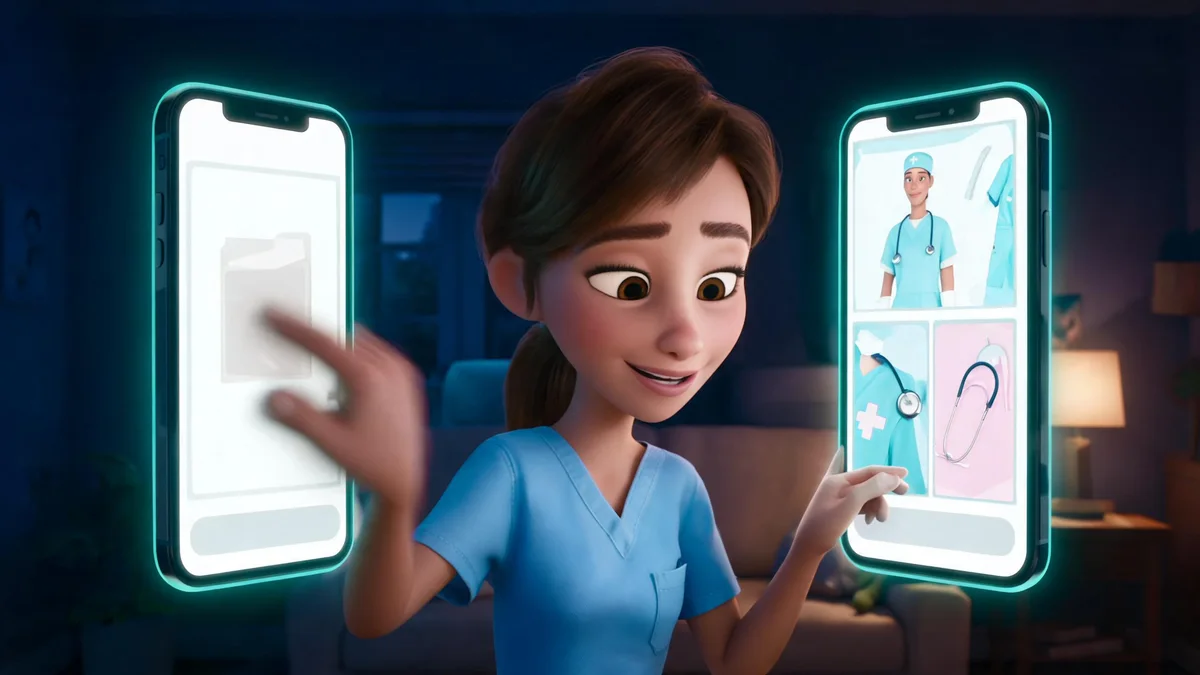
Without an avatar: "Get fit with my online program! Workouts for everyone. Sign up today."
With Brenda in mind: "Nurses on 12-hour shifts: you don't need a gym or an hour. Get your energy back with 20-minute home workouts you can do before the kids wake up."
The second one names who it's for, uses her words ("energy", "no gym"), answers her biggest doubt (time) and paints her dream result. Same coach, same program. One of these ads gets scrolled past. The other makes Brenda stop and think, "Wait, that's me."
That's the whole point of a customer avatar: it turns generic marketing into a message that feels personal.
Where to find real answers (not guesses)
The best avatar uses your buyer's real words. Here's where to find them:
- Reviews of competing products. Read the 3-star reviews especially. They're honest about what's missing.
- Reddit, Quora and Facebook groups. Search your topic and read how people describe the problem.
- Your DMs, emails and sales calls. Write down the exact words people use.
- Comments on popular posts and YouTube videos in your niche.
- Short surveys or a quiz sent to your audience.
5 customer avatar mistakes to avoid
- Too broad. "Women 25 to 55 who want to be healthy" isn't an avatar. It's a crowd.
- Made-up words. If your copy uses words your buyer never says, it won't land.
- Only demographics. Age and job help. Pain, doubts and dreams sell.
- One avatar for everything. Different buyers need different ads, pages and emails.
- Write it once and forget it. Update it as you learn from real customers.
How to use your customer avatar
- Ads: open with their exact problem in their words. Our guide to Facebook ads not converting shows why message match matters.
- Sales page: write the headline for this one person. See how to write a sales page.
- Emails: answer the doubt from question 7 in your welcome emails.
- Content: make posts about the problems in questions 3 to 5.
FAQ
What is a customer avatar template?
A fill-in document that helps you describe your ideal buyer: who they are, their problem, what they've tried, their dream result, their doubts and the exact words they use.
How many customer avatars should I have?
Start with one. Add more only when you sell to clearly different buyers, and give each one its own ads, page and emails.
What's the difference between a customer avatar and a buyer persona?
They're mostly the same idea. Both describe your ideal customer. "Avatar" is common with coaches and online businesses, "buyer persona" in B2B marketing.
Where do I find information for my customer avatar?
Real reviews (especially 3-star ones), Reddit and Facebook groups, your DMs and sales calls, comments in your niche, and short surveys.
How often should I update my customer avatar?
Every few months, or whenever you learn something new from real customers.

Want your avatar built for you, then turned into a full campaign?
Try CIAgent for 3 days for $3. Steven asks you the right questions and builds your buyer avatar into CIAgent's Brain. Then Boris, Florence and Ben write your sales page, emails and posts for that exact person, all in your voice and checked by Cora. You get 150 credits and 3 bonuses.
Build my avatar and campaign: 3 days for $3 →
Not sure where to start? Take the free 2-minute quiz to find your #1 sales leak.